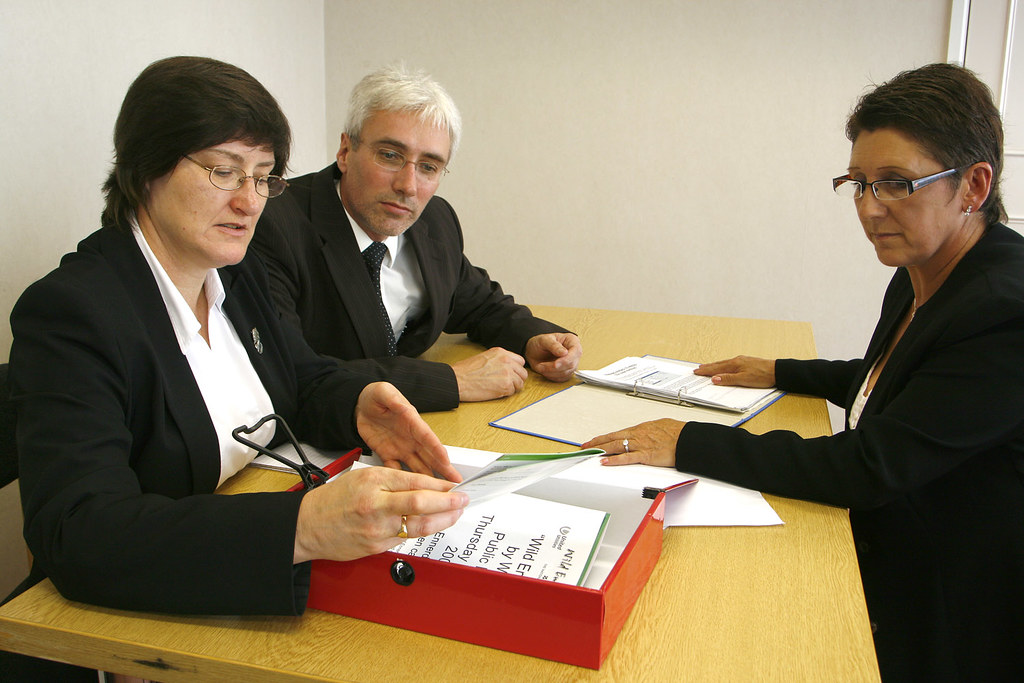
A disciplinary invitation can make the room feel decided before you enter it. Do not accept that feeling as fact. Your job before the meeting is to slow things down enough to understand the allegation, protect your record, and avoid being isolated.
This is general information for workers in Germany, including agency, temporary, subcontracted, probationary, part-time, and precarious workers. It is not legal advice for your individual case. The shop-floor rule applies: check, document, do not sign, do not go alone.
Master checklist before the meeting
Before you attend, try to do these things:
- Get the invitation, purpose, time, place, and attendees in writing.
- Ask for the allegation in clear terms: what, when, where, who, and which rule.
- Ask what documents or evidence the employer is relying on.
- Check the employment contract, workplace policy, Betriebsvereinbarung, handbook, and any relevant instruction.
- Contact the Betriebsrat, a union, or another support person as early as possible.
- Ask whether you may bring someone with you.
- Prepare your own timeline and documents.
- List witnesses or context the employer may be missing.
- Decide which points you can answer and which require more time.
- Prepare questions for the meeting.
- Do not sign admissions, warnings, settlements, resignation letters, or meeting minutes under pressure.
- After the meeting, make your own written note and send a short correction if the employer’s record is wrong.
1. Start with the invitation: what kind of meeting is this?
Employers use many labels: personnel meeting, clarification meeting, investigation meeting, disciplinary hearing, conduct meeting, feedback meeting, return-to-work meeting, or “quick conversation.” The label matters less than the possible consequences.
Ask in writing: “Is this meeting disciplinary? Could it lead to a warning, transfer, dismissal, change of duties, or other sanction?” If the answer is vague, repeat the question. You are not being difficult. You are trying to prepare properly.
If the meeting is scheduled at very short notice, ask for more time, especially if the allegation is serious, you need representation, you need translation, or documents have not been provided. A reasonable employer can explain urgency. An unreasonable employer often relies on speed.
2. Demand clear allegations
“Your behaviour was unacceptable” is not enough. “There were complaints” is not enough. “We need to discuss performance” is not enough if the employer is preparing a disciplinary outcome.
Ask:
- What exactly am I alleged to have done or failed to do?
- On what date and at what time?
- Where did it happen?
- Who reported it or witnessed it?
- Which workplace rule, instruction, contract term, or legal obligation is said to be breached?
- Is the concern conduct, performance, absence, safety, confidentiality, customer complaint, conflict, or something else?
If the employer refuses details, say calmly: “I cannot respond properly without knowing the allegation.” In the meeting, repeat that. Do not fill the gaps by guessing. Guessing can create admissions about issues the employer had not proven.
3. Check the evidence before you answer fully
You may need to see rotas, time records, emails, chat messages, CCTV descriptions, customer complaints, machine logs, delivery records, incident reports, policies, training records, or previous warnings. Ask what the employer has and whether you can review it before responding.
If the employer quotes a document, ask for the document. If they say “several people say,” ask what those people actually reported. If they rely on a policy, ask which version was in force and when you received it.
Do not destroy evidence. Do not edit messages. Do not ask colleagues to lie. Do not secretly access systems you are not allowed to access. Keep material you lawfully have, and make a list of material the employer controls.
4. Bring accompaniment where possible
Can you bring someone with you? Often, the first routes are the Betriebsrat, a union representative, or a trusted colleague. The exact entitlement can depend on the workplace, the type of meeting, collective agreements, works agreements, and the issue. Ask early and in writing.
Even where the employer resists, support still matters. A companion can take notes, remind you to pause, observe tone, and stop the meeting becoming three managers against one worker. If you cannot bring someone into the room, arrange a call before and after.
If you need interpretation, say so early. Do not let a complex disciplinary issue run through improvised translation by a colleague who is also under workplace pressure.
For collective organizing under fear, use the Fair Work & Workers’ Rights Collective guide on organizing with colleagues. This article stays with individual meeting preparation.
5. Build your timeline
Write your own chronology before the meeting. Include what happened before, during, and after the alleged event. Keep it factual:
- What task were you assigned?
- Who gave instructions?
- What training or equipment did you have?
- What workload, staffing, deadline, system failure, safety issue, or customer pressure existed?
- What did you say at the time?
- Who was present?
- What documents exist?
Do not prepare only a defence slogan. Prepare the working conditions around the allegation. Many disciplinary cases are framed as individual misconduct when the real issue includes understaffing, unclear instructions, broken equipment, impossible targets, inconsistent management, or missing training.
6. Separate answer, context, and mitigation
In the meeting, keep three categories apart.
First: what you accept. “I was late on that date.” “I sent the message.” “I made an error in the form.”
Second: what you dispute. “I was not trained on that system.” “I did not refuse the task; I asked for protective equipment.” “The customer complaint omits what happened before.”
Third: context or mitigation. “The shift was understaffed.” “The supervisor changed the instruction verbally.” “The system outage was reported.” “I had medical documentation.” “I asked for clarification and did not receive it.”
This structure prevents the employer from treating every explanation as an excuse. It also prevents you from denying facts that are easy to prove. Credibility matters. Be precise.
7. Prepare questions for procedural fairness
Useful questions include:
- Who will decide the outcome?
- Is the meeting investigatory or disciplinary?
- Will I receive the evidence?
- Can I respond in writing after the meeting?
- Will witnesses be interviewed?
- Will the employer consider documents I provide?
- Is suspension being considered, and on what basis?
- What possible outcomes are being considered?
- Will I receive minutes?
- Is there an appeal route?
Procedural fairness is not a magic phrase. It is practical: know the case, have time to respond, be allowed to present relevant information, and get a decision based on evidence rather than surprise.
8. Be careful with minutes and signatures
At the end of the meeting, you may be asked to sign minutes, an acknowledgement, a warning, a settlement, a resignation, or a “mutual agreement.” Do not sign because everyone is watching you.
If minutes are accurate, you can ask for time to read them. If they are inaccurate, write corrections. If you are unsure, write “received, not agreed” only if you understand the effect, or refuse to sign until you have advice. Never sign a blank or incomplete document.
If the employer says signing “does not matter,” ask why it is needed. If it does not matter, it can wait.
9. Know possible outcomes
Outcomes can include no action, informal advice, training, change of duties, a written warning, final warning, transfer, repayment demand, suspension, dismissal, or an offer to end the employment by agreement. Each has different consequences.
A warning can matter later even if it feels minor. Check what it says, how long it will remain on file, and whether you can respond in writing. If the warning is wrong, do not ignore it. A short written objection may matter later.
If dismissal is mentioned or you receive a written Kündigung, act quickly. In Germany, many dismissal challenges through Kündigungsschutzklage must be filed at the Arbeitsgericht within three weeks of receiving the dismissal. Do not spend that time arguing only with HR.
10. Appeal, advice, and handoffs
Ask for the appeal route in writing. Note the deadline. Appeals should be specific: what finding is wrong, what evidence was ignored, what procedure was unfair, what outcome is disproportionate, and what remedy you seek.
If the allegation involves harassment, racist treatment, sexism, disability, anti-queer treatment, or another discrimination layer, the workplace disciplinary process is not the whole map. Equal Voices Initiative, Women’s Equity Alliance, or Queer Safety & Belonging Network may be the better handoff for discrimination depth. If you need legal-aid route mapping or court procedure, Justice Access Centre is the sibling handoff.
After the meeting, write your own note while it is fresh. Date it. Save the invitation, evidence, minutes, outcome letter, and your response. A disciplinary process is not only about what happened. It is also about who controls the record. Do not let the employer be the only record keeper.