Audio
DECLARACIÓN DE DERECHOS HUMANOS
Declaración Universal de Derechos Humanos - esp - ks
Declaración Universal de Derechos Humanos: ¿Qué protecciones debería tener cada persona—en todas partes?
Una declaración universal de derechos humanos como un estándar común para todos los pueblos y naciones—construida en torno al objetivo de libertad, justicia y paz de la declaración, y luego fundamentada en los Artículos 1–17 sobre igualdad, seguridad, ley y libertades básicas.
Audio
00:00 / 16:03
Transcripción
00:14
THE UNITED NATION'S UNIVERSAL DECLARATION OF HUMAN RIGHTS.
00:24
ENGLISH VERSION PREAMBLE Whereas recognition of the inherent dignity and of the equal and inalienable rights of all members of the human family is the foundation of freedom, justice, and peace in the world.
00:44
Whereas disregard and contempt for human rights have resulted in barbarous acts which have outraged the conscience of mankind, and the advent of a world in which human freedom of speech and belief and freedom from fear and want has been proclaimed as the highest aspiration of the common people.
01:05
Whereas it is essential, if man is not to be compelled to have recourse, as a last resort, to rebellion against tyranny and oppression.
01:16
That human rights should be protected by the rule of law.
01:21
Whereas it is essential to promote the development of friendly relations between nations.
01:28
Whereas the peoples of the United Nations have in the Charter reaffirmed their faith in fundamental human rights, in the dignity and worth of the human person, and in the equal rights of men and women, and have determined to promote social progress and better standards of life in larger freedom.
01:47
Whereas member states have pledged themselves to achieve, in cooperation with the United Nations, the promotion of universal respect for, and observance of, human rights and fundamental freedoms.
02:03
Whereas a common understanding of these rights and freedoms is of the greatest importance for the full realization of this pledge.
02:12
Now, therefore, the General Assembly proclaims this Universal Declaration of Human Rights as a common standard of achievement for all peoples and all nations, to the end that every individual and every organ of society, keeping this declaration constantly in mind, shall strive by teaching and education to promote respect for these
02:37
rights and freedoms, and by progressive measures, national and international, to secure their universal and effective recognition and observance, both among the peoples of member states themselves, and among the peoples of territories under their jurisdiction.
02:58
Article 1.
03:00
All human beings are born free and equal in dignity and rights.
03:06
They are endowed with reason and conscience, and should act towards one another in a spirit of brotherhood.
03:16
Article 2.
03:18
Everyone is entitled to all the rights and freedoms set forth in this declaration, without distinction of any kind, such as race, color, sex, language, religion, political or other opinion, national or social origin, property, birth, or other status.
03:40
Furthermore, no distinction shall be made on the basis of the political, jurisdictional, or international status of the country or territory to which a person belongs, whether it be independent, trust, non-self -governing, or under any other limitation of sovereignty.
04:02
Article 3.
04:04
Everyone has the right to life, liberty, and security of person.
04:11
Article 4.
04:13
No one shall be held in slavery or servitude.
04:16
Slavery and the slave trade shall be prohibited in all their forms.
04:24
Article 5.
04:26
No one shall be subjected to torture or to cruel, inhuman, or degrading treatment or punishment.
04:34
Article 6.
04:36
Everyone has the right to recognition everywhere as a person before the law.
04:43
Article 7.
04:45
All are equal before the law and are entitled without any discrimination to equal protection of the law.
04:53
All are entitled to equal protection against any discrimination in violation of this declaration and against any incitement to such discrimination.
05:04
Article 8.
05:06
Everyone has the right to an effective remedy by the competent national tribunals for acts violating the fundamental rights granted him by the Constitution or by law.
05:19
Article 9.
05:21
No one shall be subjected to arbitrary arrest, detention, or exile.
05:28
Article 10.
05:31
Everyone is entitled in full equality to a fair and public hearing by an independent and impartial tribunal in the determination of his rights and obligations and of any criminal charge against him.
05:46
Article 11.
05:48
1. Everyone charged with a penal offence has the right to be presumed innocent until proved guilty according to law in a public trial at which he has had all the guarantees necessary for his defence.
06:02
2. No one shall be held guilty of any penal offence on account of any act or omission which did not constitute a penal offence under national or international law at the time when it was committed, nor shall a heavier penalty be imposed than the one that was applicable at the time the penal offence was committed.
06:26
Article 12.
06:28
No one shall be subjected to arbitrary interference with his privacy, family, home or correspondence, nor to attacks upon his honour and reputation.
06:39
Everyone has the right to the protection of the law against such interference or attacks.
06:47
Article 13.
06:49
1. Everyone has the right to freedom of movement and residence within the borders of each State.
06:57
2. Everyone has the right to leave any country, including his own, and to return to his country.
07:06
Article 14.
07:09
1. Everyone has the right to seek and to enjoy in other countries asylum from persecution.
07:17
2. This right may not be invoked in the case of prosecutions genuinely arising from non-political crimes or from acts contrary to the purposes and principles of the United Nations.
07:32
Article 15.
07:34
1. Everyone has the right to a nationality.
07:40
2. No one shall be arbitrarily deprived of his nationality, nor denied the right to change his nationality.
07:50
Article 16.
07:52
1. Men and women of full age, without any limitation due to race, nationality or religion, have the right to marry and to found a family.
08:04
They are entitled to equal rights as to marriage, during marriage, and at its dissolution.
08:12
2. Marriage shall be entered into only with the free and full consent of the intending spouses.
08:20
3. The family is the natural and fundamental group unit of society, and is entitled to protection by society and the State.
08:32
Article 17.
08:34
1. Everyone has the right to own property alone as well as in association with others.
08:42
2. No one shall be arbitrarily deprived of his property.
08:49
Article 18.
08:52
1. Everyone has the right to freedom of thought, conscience, and religion.
08:56
This right includes the freedom to change his religion or belief, and freedom, either alone or in community with others, and in public or private, to manifest his religion or belief in teaching, practice, worship, and observance.
09:13
Article 19.
09:16
Everyone has the right to freedom of opinion and expression.
09:19
This right includes freedom to hold opinions without interference, and to seek, receive, and impart information and ideas through any media and regardless of frontiers.
09:32
Article 20.
09:34
1. Everyone has the right to freedom of peaceful assembly and association.
09:42
2. No one may be compelled to belong to an association.
09:49
Article 21.
09:51
1. Everyone has the right to take part in the government of his country directly or through freely chosen representatives.
10:01
2. Everyone has the right to equal access to public service in his country.
10:08
3. The will of the people shall be the basis of the authority of government.
10:14
This will shall be expressed in periodic and genuine elections, which shall be by universal and equal suffrage, and shall be held by secret vote or by equivalent free voting procedures.
10:29
Article 22.
10:31
Everyone, as a member of society, has the right to social security, and is entitled to realization through national effort and international cooperation, and in accordance with the organization and resources of each state, of the economic, social, and cultural rights indispensable for his dignity and the free development of his personality.
10:57
Article 23.
11:00
1. Everyone has the right to work, to free choice of employment, to just and favorable conditions of work, and to protection against unemployment.
11:12
2. Everyone, without any discrimination, has the right to equal pay for equal work.
11:20
3. Everyone who works has the right to just and favorable remuneration, ensuring for himself and his family an existence worthy of human dignity, and supplemented, if necessary, by other means of social protection.
11:37
4. Everyone has the right to form and to join trade unions for the protection of his interests.
11:46
Article 24.
11:49
Everyone has the right to rest and leisure, including reasonable limitation of working hours and periodic holidays with pay.
11:59
Article 25.
12:02
1. Everyone has the right to a standard of living adequate for the health and well-being of himself and of his family, including food, clothing, housing and medical care and necessary social services, and the right to security in the event of unemployment, sickness, disability, widowhood, old age, or other lack of livelihood in circumstances beyond his control.
12:29
2. Motherhood and childhood are entitled to special care and assistance.
12:36
All children, whether born in or out of wedlock, shall enjoy the same social protection.
12:45
Article 26.
12:47
1. Everyone has the right to education.
12:51
Education shall be free, at least in the elementary and fundamental stages.
12:57
Elementary education shall be compulsory.
12:59
Technical and professional education shall be made generally available, and higher education shall be equally accessible to all on the basis of merit.
13:11
2. Education shall be directed to the full development of the human personality and to the strengthening of respect for human rights and fundamental freedoms.
13:22
It shall promote understanding, tolerance and friendship among all racial or religious groups, and shall further the activities of the United Nations for the maintenance of peace.
13:35
3. Parents have a prior right to choose the kind of education that shall be given to their children.
13:45
Article 27.
13:47
1. Everyone has the right, freely, to participate in the cultural life of the community, to enjoy the arts, and to share in scientific advancement and its benefits.
14:00
2. Everyone has the right to the protection of the moral and material interests resulting from any scientific, literary, or artistic production of which he is the author.
14:14
Article 28.
14:17
Everyone is entitled to a social and international order in which the rights and freedoms set forth in this declaration can be fully realized.
14:29
Article 29.
14:30
1. Everyone has duties to the community in which alone the free and full development of his personality is possible.
14:42
2. In the exercise of his rights and freedoms, everyone shall be subject only to such limitations as are determined by law solely for the purpose of securing due recognition and respect for the rights and freedoms of others, and of meeting the just requirements of morality, public order, and the general welfare in a democratic society.
15:06
3. These rights and freedoms may in no case be exercised contrary to the purposes and principles of the United Nations.
15:16
Article 30.
15:18
Nothing in this declaration may be interpreted as implying for any state, group, or person any right to engage in any activity or to perform any act aimed at the destruction of any of the rights and freedoms set forth herein.
15:38
End of the Universal Declaration of Human Rights
Más del archivo
Publicación
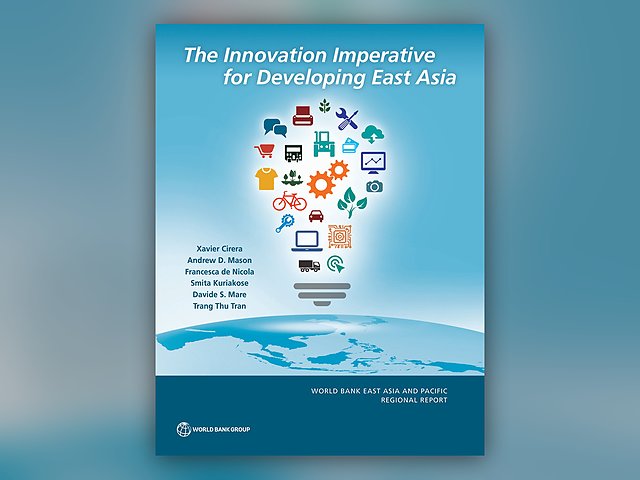
El Imperativo de Innovación para el Desarrollo de Asia Oriental
Un informe regional del Banco Mundial sobre el imperativo de innovación para el desarrollo de Asia Oriental — organizado como una serie emblemática para convertir los desafíos regionales en oportunidades, comenzando con la visión general y la introducción.
Publicación
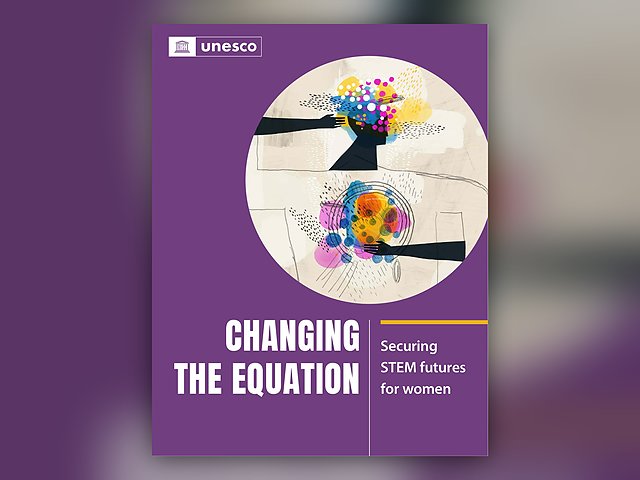
Asegurando futuros STEM para mujeres: cambiando la ecuación
Un informe de política de la UNESCO para el Grupo de Trabajo sobre el Empoderamiento de la Mujer del G20 sobre cómo cambiar la ecuación en STEM — desde las bases tempranas y el acceso postsecundario hasta lugares de trabajo inclusivos — construido en torno a mecanismos que mejoran la aspiración, participación y retención de mujeres en los países del G20.
Publicación
Orientación curricular para la sostenibilidad: enseñanza y aprendizaje para la acción climática
Una orientación curricular para la acción climática para escuelas y países construida en torno a los resultados de aprendizaje esperados por edad—desde 5 hasta 18+—con un enfoque de aprendizaje a lo largo de la vida, ayudando a los equipos a integrar un aprendizaje climático científicamente preciso y orientado a la justicia en los currículos nacionales.
Publicación
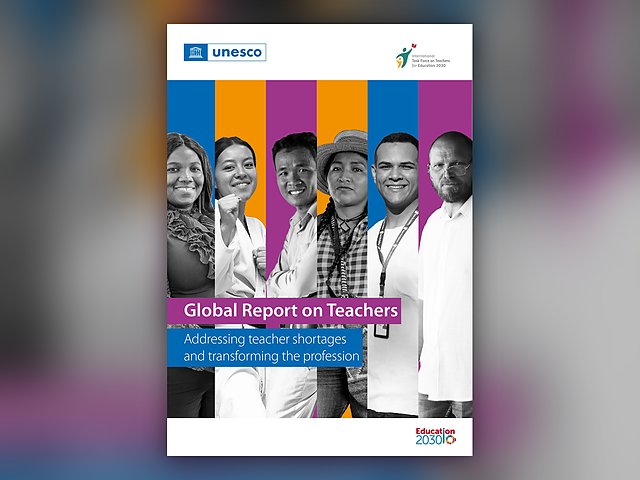
Informe Global sobre los Docentes: Abordando la escasez de docentes y transformando la profesión
Un informe global sobre la escasez de docentes y la transformación de la profesión, centrado en el ODS 4—educación equitativa, inclusiva, de calidad con aprendizaje a lo largo de la vida. Utilizando nuevos datos, hace un llamado a dignificar la enseñanza mientras se abordan las brechas de reclutamiento y retención, incluyendo cómo añadir 44 millones de docentes para 2030.
Publicación
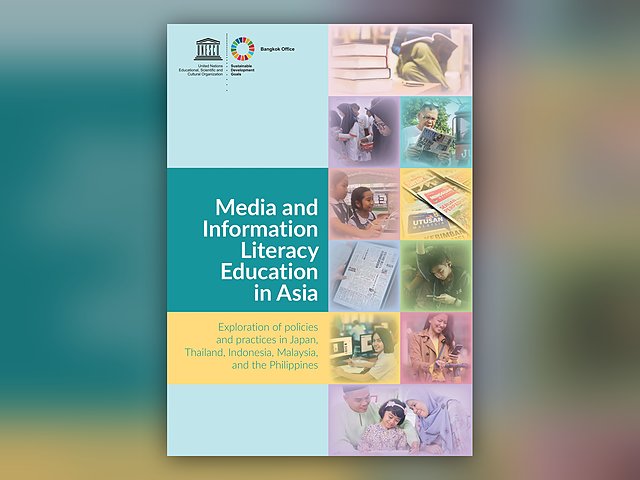
Educación en Alfabetización Mediática e Informacional en Asia: Exploración de políticas y prácticas en Japón, Tailandia, Indonesia, Malasia y Filipinas
Una exploración de políticas y prácticas de educación en alfabetización mediática e informacional en Asia, siguiendo un hilo conductor: cómo cinco países abordan riesgos urgentes con la AMI en entornos formales, informales y no formales—Japón, Tailandia, Indonesia, Malasia y Filipinas.
Publicación
Estudio de viabilidad para conectar todas las instituciones de educación superior africanas a Internet de alta velocidad
Un estudio de caso de Burkina Faso para conectar todas las instituciones de educación superior africanas a Internet de alta velocidad, rastreando la demanda del sector educativo y la oferta del sector TIC, y luego enfocándose en la red de investigación y educación FasoREN y su madurez NREN.
Publicación
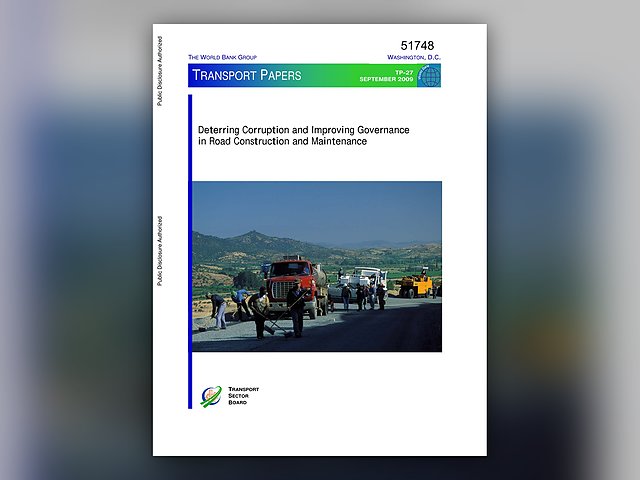
Disuadir la corrupción y mejorar la gobernanza en la construcción y mantenimiento de carreteras
Una guía especializada para la disuasión de la corrupción y la mejora de la gobernanza en la construcción y mantenimiento de carreteras — con análisis a nivel sectorial y funcional, así como herramientas para la planificación de políticas, servicios de construcción, unidades estatales de ingeniería y construcción, contratos de APP y control de progreso a través de indicadores adecuados.
Publicación
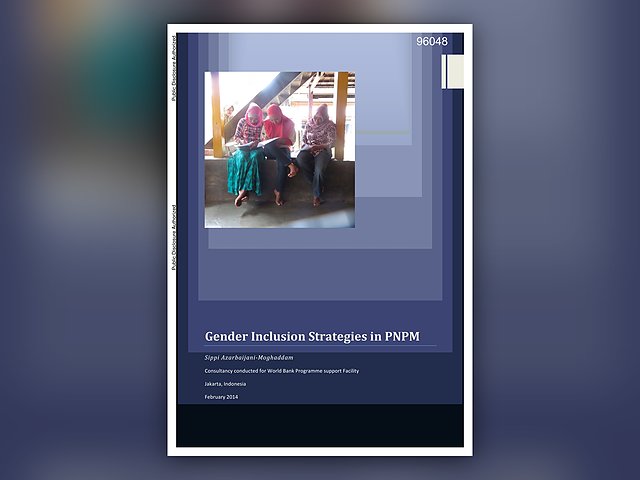
Estrategias de Inclusión de Género en el PNPM
Un estudio de consultoría sobre estrategias de género e inclusión en el PNPM (Programa Nacional de Promoción de la Comunidad Rural) para la Instalación de Apoyo de la Banco Mundial — con enfoque en principios de género, medidas afirmativas, participación de mujeres y monitoreo/evaluación de impacto.
Publicación
Cuestiones y opciones para el desarrollo de energías renovables en Afganistán
Un análisis de las oportunidades y riesgos de apoyar el suministro eléctrico de Afganistán con energías renovables — desde la infraestructura de red deficiente y la brecha de demanda hasta los recursos hídricos estacionales y el objetivo de proporcionar alrededor del 10% de la demanda proyectada (350–500 MW) a partir de energías renovables para 2032.
Publicación
La Tierra Importa
Un estudio sobre la escasez de tierra y el uso de la tierra en Oriente Medio y África del Norte, con un enfoque en los impulsores centrales, las barreras legales e institucionales, las barreras de acceso, las distorsiones del mercado y las opciones políticas concretas para una mejor gestión de los recursos escasos.
Publicación
Plan de Acción sobre Cambio Climático del Grupo del Banco Mundial 2016-2020
Un plan de acción sobre el cambio climático del Grupo del Banco Mundial para 2016–2020 con un hilo conductor: desde políticas climáticas decisivas hasta el apalancamiento de recursos y la escalación de acciones climáticas concretas — desde energías renovables hasta ciudades sostenibles y "No dejar a nadie atrás".