Audio
UN HUMAN RIGHTS DECLARATION
Universal Declaration of Human Rights (Spanish reading)
The Universal Declaration of Human Rights: what protections apply to every person, everywhere?
A preamble and first set of articles laying out a common standard for human dignity and rights—starting with freedom from discrimination, then rights to life, liberty, security, and protection from slavery and torture.
Audio
00:00 / 13:20
Transcript
00:00
This is a recording from LibriVox.
00:02
All recordings from LibriVox are in the public domain.
00:05
For more information or to volunteer, please visit LibriVox.org.
00:11
Recorded by Karen Savage from Waco, Texas.
00:14
The Universal Declaration of Human Rights of the United Nations.
00:19
Adopted and proclaimed by the General Assembly in its
Resolution 217A, Roman numeral 3, of December 10, 1948.
00:29
Preamble.
00:30
Considering that freedom, justice and peace in the world are based on the recognition of the
inherent dignity and of the equal and inalienable rights of all members of the human family.
00:42
Considering that disregard and contempt for human rights have resulted in barbarous acts which have outraged the conscience of mankind, and that the advent of a world
in which human beings shall enjoy freedom of speech and belief and freedom from fear and want has been proclaimed as the highest aspiration of the common people.
01:03
Considering it essential that human rights be protected by the rule of law so that man is not
compelled to have recourse, as a last resort, to rebellion against tyranny and oppression.
01:14
Considering also essential to promote the
development of friendly relations between nations.
01:20
Considering that the peoples of the United Nations have reaffirmed their faith in fundamental human
rights, in the dignity and worth of the human person, and in the equal rights of men and women.
01:32
And have declared themselves resolved to promote social
progress and better standards of life in larger freedom.
01:40
Considering that Member States have pledged themselves to ensure, in cooperation with the
United Nations, universal and effective respect for human rights and fundamental freedoms.
01:51
And considering that a common understanding of these rights and freedoms is of the greatest importance for the full realization of this commitment, the General Assembly proclaims this Universal Declaration of Human Rights as a common ideal for all peoples and nations, to the end that both individuals and institutions,
keeping this Declaration constantly in mind, shall strive by teaching and education to promote respect for these rights and freedoms and to secure their universal and effective recognition and observance, both among the peoples of Member States and among the peoples of territories under their jurisdiction.
02:35
Article 1.
02:36
All human beings are born free and equal in dignity and rights, and endowed as they are
with reason and conscience, should act towards one another in a spirit of brotherhood.
02:46
Article 2.
02:48
Everyone is entitled to all the rights and freedoms set forth in this Declaration, without distinction of any kind, such as race,
color, sex, language, religion, political or other opinion, national or social origin, property, birth or any other status.
03:05
Furthermore, no distinction shall be made on the basis of the political, jurisdictional or international status of the country or
territory to which a person belongs, whether it be independent, trust, non-self-governing or under any other limitation of sovereignty.
03:26
Article 3.
03:27
Everyone has the right to life, liberty, and security of person.
03:33
Article 4.
03:34
No one shall be held in slavery or servitude.
03:37
Slavery and the slave trade shall
be prohibited in all their forms.
03:42
Article 5.
03:44
No one shall be subjected to torture or
to cruel, inhuman or degrading treatment.
03:50
Article 6.
03:51
Everyone has the right to recognition
everywhere as a person before the law.
03:58
Article 7.
03:59
All are equal before the law and are entitled without
any discrimination to equal protection of the law.
04:05
Everyone has the right to equal protection against any discrimination in
violation of this declaration and against any incitement to such discrimination.
04:14
Article 8.
04:16
Everyone has the right to an effective remedy by the competent national tribunals
for acts violating the fundamental rights granted him by the constitution or by law.
04:29
Article 9.
04:30
No one shall be arbitrarily arrested, detained or exiled.
04:35
Article 10.
04:36
Everyone is entitled in full equality to a fair and public hearing by an independent and impartial
tribunal, in the determination of his rights and obligations and of any criminal charge against him.
04:53
Article 11.
04:54
Number 1.
04:55
Every person accused of a crime has the right to be presumed innocent until proven guilty, in accordance
with the law and in a public trial in which all necessary guarantees for their defense have been ensured.
05:09
Number 2.
05:10
No one shall be convicted for acts or omissions that were not criminal at
the time they were committed according to national or international law.
05:18
Nor shall a penalty more severe than that applicable
at the time of the commission of the crime be imposed.
05:24
Article 12.
05:26
No one shall be subjected to arbitrary interference with their privacy,
family, home, or correspondence, nor to attacks on their honor or reputation.
05:35
Everyone has the right to the protection of
the law against such interference or attacks.
05:41
Article 13.
05:42
Number 1.
05:44
Everyone has the right to move freely and to choose
their residence within the territory of a state.
05:50
Number 2.
05:51
Everyone has the right to leave any country,
including their own, and to return to their country.
05:57
Article 14.
05:58
Number 1.
05:59
In the case of persecution, everyone has the right
to seek asylum and to enjoy it in any country.
06:06
Number 2.
06:07
This right shall not be invoked against a judicial action genuinely arising from common
crimes or from acts contrary to the purposes and principles of the United Nations.
06:18
Article 15.
06:19
Number 1.
06:20
Everyone has the right to a nationality.
06:23
Number 2.
06:24
No one shall be arbitrarily deprived of his
nationality nor the right to change his nationality.
06:30
Article 16.
06:32
Number 1.
06:33
Men and women, upon reaching the marriageable age, have the right to marry and
to found a family without any restriction due to race, nationality or religion.
06:43
And they shall enjoy equal rights in respect of marriage,
during marriage and in the event of its dissolution.
06:49
Number 2.
06:50
Marriage shall be entered into only with the
free and full consent of the intending spouses.
06:56
Number 3.
06:57
The family is the natural and fundamental group unit of
society and is entitled to protection by society and the State.
07:05
Article 17.
07:06
Number 1.
07:07
Everyone has the right to own property
alone as well as in association with others.
07:11
Number 2.
07:13
No one shall be arbitrarily deprived of his property.
07:16
Article 18.
07:18
Everyone has the right to freedom
of thought, conscience and religion.
07:23
This right includes freedom to change his religion or belief, and freedom, either alone or in community with
others and in public or private, to manifest his religion or belief in teaching, practice, worship and observance.
07:38
Article 19.
07:40
Everyone has the right to freedom of opinion and expression.
07:44
This right includes not being disturbed because of one's opinions, the right to seek and receive information
and opinions, and the right to disseminate them without limitation of borders by any means of expression.
07:56
Article 20.
07:57
Number 1.
07:57
Everyone has the right to peaceful assembly and association.
08:03
Number 2.
08:04
No one shall be compelled to belong to an association.
08:08
Article 21.
08:09
Number 1.
08:10
Everyone has the right to participate in the government of their
country, directly or through freely chosen representatives.
08:17
Number 2.
08:19
Everyone has the right of access on equal
terms to the public service of their country.
08:24
Number 3.
08:25
The will of the people is the basis
of the authority of public power.
08:29
This will shall be expressed through authentic elections that shall be held periodically by universal and
equal suffrage and by secret ballot or other equivalent procedure that guarantees the freedom of the vote.
08:43
Article 22.
08:44
Everyone, as a member of society, has the right to social security and to obtain, through national effort and international cooperation, in accordance with the organization
and resources of each state, the satisfaction of the economic, social, and cultural rights indispensable for their dignity and the free development of their personality.
09:05
Article 23.
09:06
Number 1.
09:08
Everyone has the right to work, to freely choose their work, to just and
favorable conditions of work, and to protection against unemployment.
09:17
Number 2.
09:18
Everyone has the right to equal pay for
equal work without any discrimination.
09:24
Number 3.
09:25
Everyone who works has the right to fair and satisfactory remuneration that ensures, as well as their family, a life
in accordance with human dignity and that will be supplemented if necessary by any other means of social protection.
09:42
Number 4.
09:43
Everyone has the right to form trade unions and
to join them for the defense of their interests.
09:49
Article 24.
09:51
Everyone has the right to rest, to enjoy leisure time, to a reasonable
limitation of working hours, and to paid periodic vacations.
10:02
Article 25.
10:03
Number 1.
10:05
Everyone has the right to an adequate standard of living that ensures, as well as their family, health
and well-being, and in particular food, clothing, housing, medical care, and necessary social services.
10:18
They also have the right to insurance in case of unemployment, illness, disability, widowhood, old age,
and other cases of loss of their means of livelihood due to circumstances beyond their control.
10:31
Number 2.
10:32
Maternity and childhood have the
right to special care and assistance.
10:37
All children born of marriage or outside of
marriage have the right to equal social protection.
10:44
Article 26.
10:45
Number 1.
10:46
Everyone has the right to education.
10:49
Education shall be free, at least in
the elementary and fundamental stages.
10:55
Elementary education shall be compulsory.
10:57
Technical and professional education
shall be made generally available.
11:01
Access to higher education shall be equal
for all based on their respective merits.
11:06
Number 2.
11:07
Education shall aim at the full development of the human personality and
the strengthening of respect for human rights and fundamental freedoms.
11:17
It shall promote understanding, tolerance, and friendship among all nations and all ethnic or religious
groups and shall promote the development of the activities of the United Nations for the maintenance of peace.
11:29
Number 3.
11:30
Parents shall have a prior right to choose the kind
of education that shall be given to their children.
11:36
Article 27.
11:37
Everyone has the right to freely participate in the cultural life of the community,
to enjoy the arts, and to participate in scientific progress and its benefits.
11:48
Number 2.
11:49
Everyone has the right to the protection of the moral and material interests resulting
from any scientific, literary, or artistic productions of which they are authors.
11:59
Article 28.
12:01
Everyone has the right to establish a social and international order in which
the rights and freedoms proclaimed in this declaration are fully effective.
12:11
Article 29.
12:13
Number 1.
12:13
Everyone has duties to the community, since only in it
can they develop their personality freely and fully.
12:21
Number 2.
12:22
In the exercise of their rights and in the enjoyment of their freedoms, everyone shall be subject only to such limitations as are determined by law solely for the purpose of securing
recognition and respect for the rights and freedoms of others and of meeting the just requirements of morality, public order, and the general welfare in a democratic society.
12:44
Number 3.
12:45
These rights and freedoms may in no case be exercised
contrary to the purposes and principles of the United Nations.
12:54
Article 30.
12:55
Nothing in this declaration shall be interpreted as conferring any right on the State to a group or an individual to undertake
and develop activities or perform acts aimed at the suppression of any of the rights and freedoms proclaimed in this declaration.
13:11
End of the Universal Declaration of Human Rights.
More from the archive
Publication
The Innovation Imperative for Developing East Asia
A World Bank East Asia and Pacific regional report on the innovation imperative for developing East Asia — organized as a flagship series to turn regional challenges into opportunities, starting with the overview and introduction.
Publication
Securing STEM futures for women: changing the equation
A UNESCO policy brief for the G20 Women’s Empowerment Working Group on changing the equation in STEM — from early foundations and post-secondary access to inclusive workplaces — built around mechanisms that improve women’s aspiration, participation, and retention in G20 countries.
Publication
Greening curriculum guidance: teaching and learning for climate action
A climate action curriculum guidance for schools and countries built around expected learning outcomes by age—from 5 to 18+—with a lifelong learning approach, helping teams integrate scientifically accurate, justice-driven climate learning into national curricula.
Publication
Global Report on Teachers: Addressing teacher shortages and transforming the profession
A global report on teacher shortages and transforming the profession, centered on SDG 4—equitable, inclusive, quality education with lifelong learning. Using new data, it calls for dignifying teaching while addressing recruitment and retention gaps, including how to add 44 million teachers by 2030.
Publication
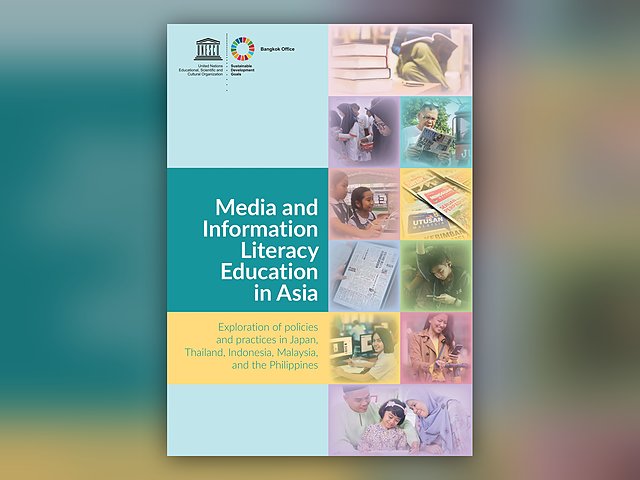
Media and Information Literacy Education in Asia: Exploration of policies and practices in Japan, Thailand, Indonesia, Malaysia, and the Philippines
A policy-and-practice exploration of media and information literacy education across Asia, following one through-line: how five countries address urgent risks with MIL in formal, informal, and non-formal settings—Japan, Thailand, Indonesia, Malaysia, and the Philippines.
Publication
Feasibility Study to Connect All African Higher Education Institutions to High-Speed Internet
A Burkina Faso country case study for connecting all African higher education institutions to high-speed internet, tracing demand from the education sector and supply from the ICT sector, then focusing on the FasoREN research and education network and its NREN maturity.
Publication
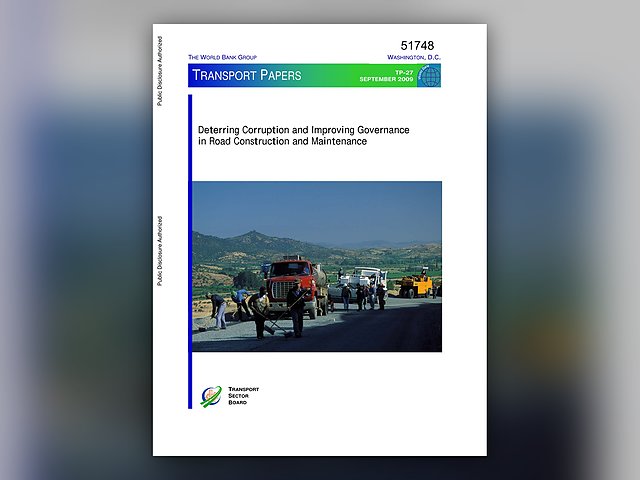
Deterring Corruption and Improving Governance in Road Construction and Maintenance
Ein Fachleitfaden zur Abschreckung von Korruption und zur Verbesserung der Regierungsführung im Straßenbau und -unterhalt — mit Analysen auf Sektor- und Funktionsebene sowie Werkzeugen für Politikplanung, Bauleistungen, staatliche Technik- und Baueinheiten, PPP-Verträge und Fortschrittskontrolle über passende Indikatoren.
Publication
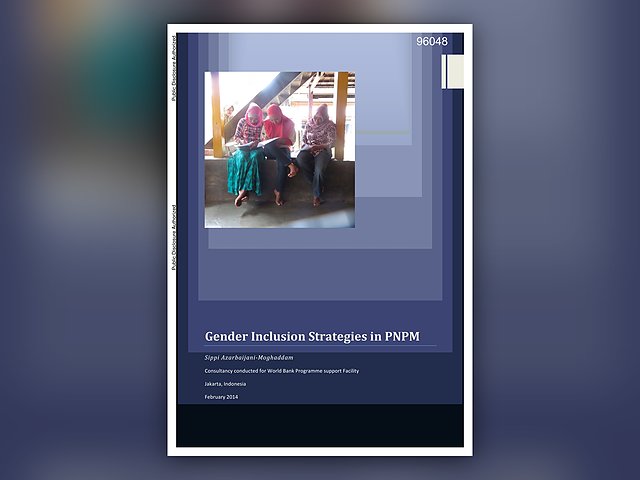
Gender Inclusion Strategies in PNPM
Eine Beratungsstudie zu Gender- und Inklusionsstrategien im PNPM (Nationales Programm zur Förderung der Dorfgemeinschaft) für die Programme Support Facility der Weltbank — mit Fokus auf Gender-Prinzipien, affirmative Maßnahmen, Teilnahme von Frauen und Monitoring/Impact-Bewertung.
Publication
Afghanistan Renewable Energy Development Issues and Options
Eine Analyse der Chancen und Risiken, Afghans Stromversorgung mit erneuerbaren Energien zu stützen — von der lückenhaften Netzinfrastruktur und der Nachfragelücke über die saisonalen Wasserressourcen bis zur Zielvorgabe, bis 2032 rund 10% des prognostizierten Bedarfs (350–500 MW) aus RE zu liefern.
Publication
Land Matters
Eine Studie zu Landknappheit und Landnutzung in Nahost und Nordafrika – mit Fokus auf die zentralen Treiber, rechtlich-institutionelle Hürden, Zugangsbarrrieren, Marktverzerrungen und konkrete politische Optionen zur besseren Steuerung von knappen Ressourcen.
Publication
World Bank Group Climate Change Action Plan 2016-2020
Ein Klimawandel-Aktionsplan der World Bank Group für 2016–2020 mit einem roten Faden: von klima-entscheidenden Richtlinien über die Hebelwirkung von Ressourcen bis zur Skalierung konkreter Klimamaßnahmen — von erneuerbaren Energien über nachhaltige Städte bis zu „Leaving No One Behind“.