Audio
OBSERVACIONES DE FIRMA
Firma de derechos civiles de LBJ 1964 editada
La Ley de Derechos Civiles de 1964: qué cambia, por qué es importante y cómo se hará cumplir.
Un discurso presidencial de firma para la Ley de Derechos Civiles de 1964, argumentando que la libertad debe significar trato igual—respaldado por el propósito de la ley, sus protecciones en lugares de servicio público, y un plan claro para implementarla.
Audio
00:00 / 10:24
Transcripción
00:02
My fellow Americans, I am about to sign into law the Civil Rights Act of 1964.
00:11
I want to take this occasion to talk to you about what that law means to every American.
00:21
One hundred and eighty-eight years ago this week, a small band of valiant men began a long struggle for freedom.
00:34
They pledged their lives, their fortunes, and their sacred honor, not only to found a nation, but to forge an ideal of freedom, not only for political independence,
00:51
but for personal liberty, not only to eliminate foreign rule,
00:59
but to establish the rule of justice in the affairs of men.
01:05
That struggle was a turning point in our history.
01:10
Today, in far corners of distant continents,
01:15
the ideals of those American patriots still shape the struggles of men who hunger for freedom.
01:25
This is a proud triumph, yet those who founded our country knew that freedom would be secure only if each generation fought to renew and enlarge its meaning.
01:43
From the minute men at Concord to the soldiers in Vietnam,
01:50
each generation has been equal to that trust.
01:55
Americans of every race and color have died in battle to protect our freedom.
02:03
Americans of every race and color have worked to build a nation of widening opportunities.
02:14
Now, our generation of Americans has been called on to continue the unending search for justice within our own borders.
02:28
We believe that all men are created equal,
02:33
yet many are denied equal treatment.
02:38
We believe that all men have certain unalienable rights,
02:43
yet many Americans do not enjoy those rights.
02:49
We believe that all men are entitled to the blessings of liberty,
02:55
yet millions are being deprived of those blessings,
02:59
not because of their own failures,
03:03
but because of the color of their skin.
03:07
The reasons are deeply embedded in history and tradition and the nature of man.
03:13
We can understand without rancor or hatred how this all happened,
03:20
but it cannot continue.
03:24
Our Constitution, the foundation of our Republic, forbids it.
03:31
The principles of our freedom, forbid it.
03:35
Morality, forbids it.
03:39
And the law I will sign tonight, forbids it.
03:44
That law is the product of months of the most careful debate and discussion.
03:51
It was proposed more than one year ago by our late and beloved President, John F. Kennedy.
04:00
It received the bipartisan support of more than two-thirds of the members of both the House and the Senate.
04:10
An overwhelming majority of Republicans, as well as Democrats, voted for it.
04:18
It has received the thoughtful support of tens of thousands of civic and religious leaders in all parts of this Nation.
04:28
And it is supported by the great majority of the American people.
04:35
The purpose of this law is simple.
04:38
It does not restrict the freedom of any American, so long as he respects the rights of others.
04:45
It does not give special treatment to any citizen.
04:49
It does say the only limit to a man's hope for happiness and for the future of his children shall be his own ability.
05:00
It does say that there are those who are equal before God, shall now also be equal in the polling booths, in the classrooms, in the factories, and in hotels and restaurants and movie theaters and other places that provide service to the public.
05:18
I am taking steps to implement the law under my constitutional obligation to take care that the laws are faithfully executed.
05:31
First, I will send to the Senate my nomination of Leroy Collins to be Director of the Community Relations Service.
05:47
Governor Collins will bring the experience of a long career of public service to the task of helping communities solve problems of human relations through reason and common sense.
06:02
Second, I shall appoint an advisory committee of distinguished Americans to assist Governor Collins in his assignment.
06:08
Third, I am sending Congress a request for supplemental appropriations to pay for necessary costs of implementing the law and asking for immediate action.
06:24
Fourth, already today in a meeting of my cabinet this afternoon, I directed the agencies of this government to fully discharge the new responsibilities imposed upon them by the law and to do it without delay and to keep me personally informed of their progress.
06:42
Fifth, I am asking appropriate officials to meet with representative groups to promote greater understanding of the law and to achieve a spirit of compliance.
06:53
We must not approach the observance and enforcement of this law in a vengeful spirit.
07:02
Its purpose is not to punish.
07:06
Its purpose is not to divide, but to end divisions, divisions which have lasted all too long.
07:15
Its purpose is national, not regional.
07:18
Its purpose is to promote a more abiding commitment to freedom,
07:25
a more constant pursuit of justice, and a deeper respect for human dignity.
07:33
We will achieve these goals because most Americans are law-abiding citizens who want to do what is right.
07:44
This is why the Civil Rights Act relies first on voluntary compliance,
07:50
then on the efforts of local communities and states to secure the rights of citizens.
07:57
It provides for the national authority to step in only when others cannot or will not do the job.
08:08
This Civil Rights Act is a challenge to all of us to go to work in our communities and our states, in our homes and in our hearts, to eliminate the last vestiges of injustice in our beloved country.
08:27
So tonight I urge every public official,
08:33
every religious leader, every business and professional man, every working man, every housewife,
08:43
I urge every American to join in this effort to bring justice and hope to all our people and to bring peace to our land.
08:59
My fellow citizens, we have come now to a time of testing.
09:03
We must not fail.
09:06
Let us close the springs of racial poison.
09:11
Let us pray for wise and understanding hearts.
09:17
Let us lay aside irrelevant differences and make our nation whole.
09:24
Let us hasten that day when our unmeasured strength and our unbounded spirit will be free to do the great works ordained for this nation by the just and wise God who is the Father
09:46
of us all.
09:49
Thank you and good night.
Más del archivo
Publicación
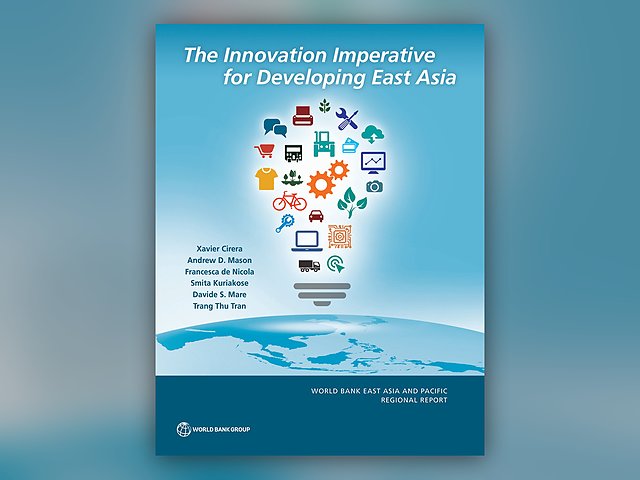
El Imperativo de Innovación para el Desarrollo de Asia Oriental
Un informe regional del Banco Mundial sobre el imperativo de innovación para el desarrollo de Asia Oriental — organizado como una serie emblemática para convertir los desafíos regionales en oportunidades, comenzando con la visión general y la introducción.
Publicación
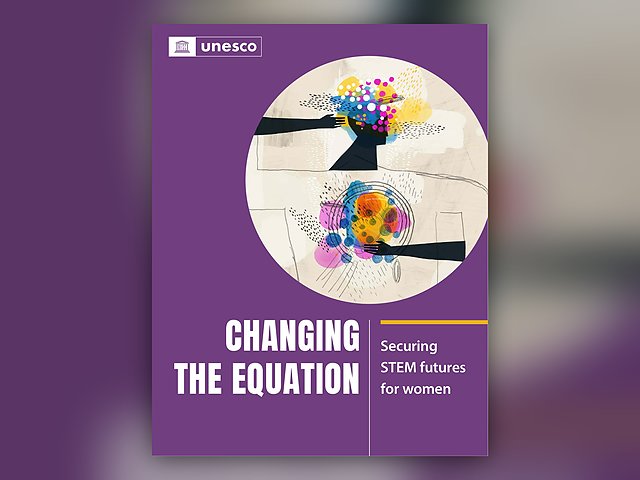
Asegurando futuros STEM para mujeres: cambiando la ecuación
Un informe de política de la UNESCO para el Grupo de Trabajo sobre el Empoderamiento de la Mujer del G20 sobre cómo cambiar la ecuación en STEM — desde las bases tempranas y el acceso postsecundario hasta lugares de trabajo inclusivos — construido en torno a mecanismos que mejoran la aspiración, participación y retención de mujeres en los países del G20.
Publicación
Orientación curricular para la sostenibilidad: enseñanza y aprendizaje para la acción climática
Una orientación curricular para la acción climática para escuelas y países construida en torno a los resultados de aprendizaje esperados por edad—desde 5 hasta 18+—con un enfoque de aprendizaje a lo largo de la vida, ayudando a los equipos a integrar un aprendizaje climático científicamente preciso y orientado a la justicia en los currículos nacionales.
Publicación
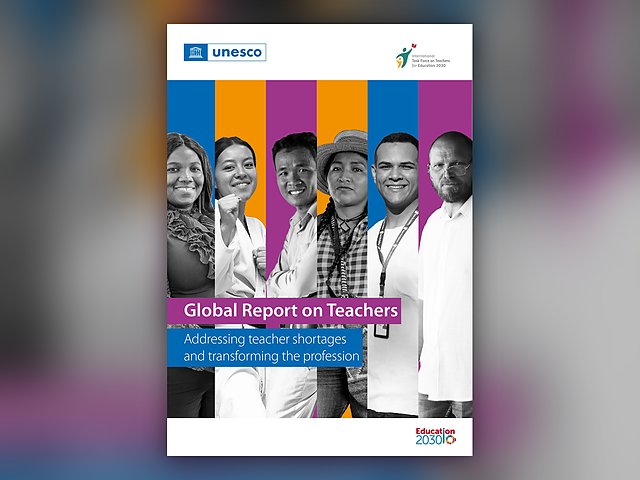
Informe Global sobre los Docentes: Abordando la escasez de docentes y transformando la profesión
Un informe global sobre la escasez de docentes y la transformación de la profesión, centrado en el ODS 4—educación equitativa, inclusiva, de calidad con aprendizaje a lo largo de la vida. Utilizando nuevos datos, hace un llamado a dignificar la enseñanza mientras se abordan las brechas de reclutamiento y retención, incluyendo cómo añadir 44 millones de docentes para 2030.
Publicación
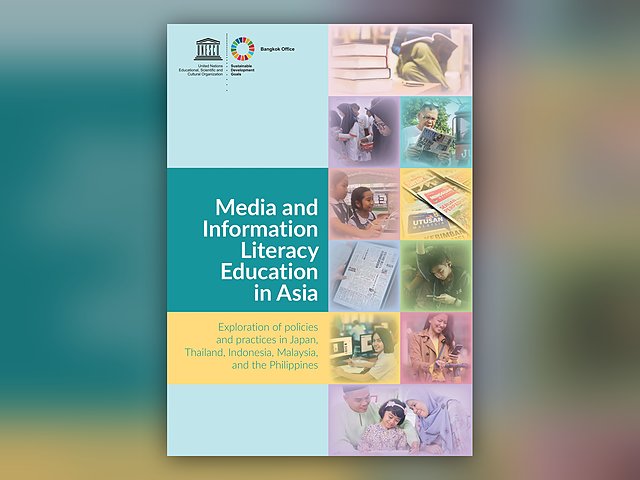
Educación en Alfabetización Mediática e Informacional en Asia: Exploración de políticas y prácticas en Japón, Tailandia, Indonesia, Malasia y Filipinas
Una exploración de políticas y prácticas de educación en alfabetización mediática e informacional en Asia, siguiendo un hilo conductor: cómo cinco países abordan riesgos urgentes con la AMI en entornos formales, informales y no formales—Japón, Tailandia, Indonesia, Malasia y Filipinas.
Publicación
Estudio de viabilidad para conectar todas las instituciones de educación superior africanas a Internet de alta velocidad
Un estudio de caso de Burkina Faso para conectar todas las instituciones de educación superior africanas a Internet de alta velocidad, rastreando la demanda del sector educativo y la oferta del sector TIC, y luego enfocándose en la red de investigación y educación FasoREN y su madurez NREN.
Publicación
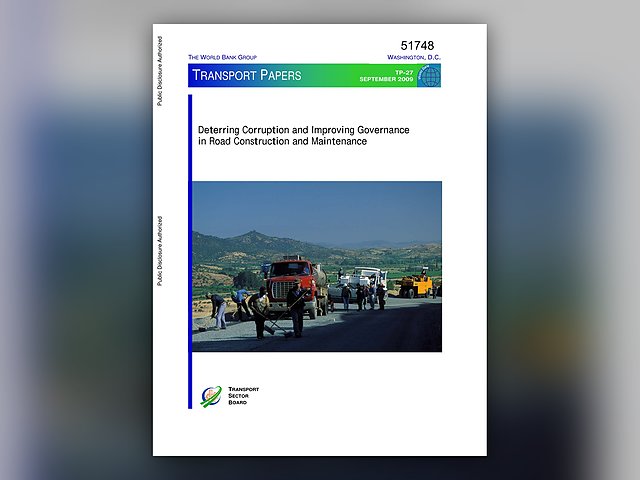
Disuadir la corrupción y mejorar la gobernanza en la construcción y mantenimiento de carreteras
Una guía especializada para la disuasión de la corrupción y la mejora de la gobernanza en la construcción y mantenimiento de carreteras — con análisis a nivel sectorial y funcional, así como herramientas para la planificación de políticas, servicios de construcción, unidades estatales de ingeniería y construcción, contratos de APP y control de progreso a través de indicadores adecuados.
Publicación
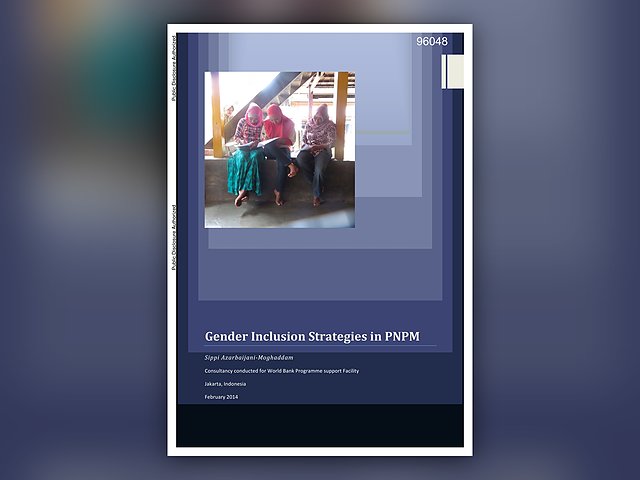
Estrategias de Inclusión de Género en el PNPM
Un estudio de consultoría sobre estrategias de género e inclusión en el PNPM (Programa Nacional de Promoción de la Comunidad Rural) para la Instalación de Apoyo de la Banco Mundial — con enfoque en principios de género, medidas afirmativas, participación de mujeres y monitoreo/evaluación de impacto.
Publicación
Cuestiones y opciones para el desarrollo de energías renovables en Afganistán
Un análisis de las oportunidades y riesgos de apoyar el suministro eléctrico de Afganistán con energías renovables — desde la infraestructura de red deficiente y la brecha de demanda hasta los recursos hídricos estacionales y el objetivo de proporcionar alrededor del 10% de la demanda proyectada (350–500 MW) a partir de energías renovables para 2032.
Publicación
La Tierra Importa
Un estudio sobre la escasez de tierra y el uso de la tierra en Oriente Medio y África del Norte, con un enfoque en los impulsores centrales, las barreras legales e institucionales, las barreras de acceso, las distorsiones del mercado y las opciones políticas concretas para una mejor gestión de los recursos escasos.
Publicación
Plan de Acción sobre Cambio Climático del Grupo del Banco Mundial 2016-2020
Un plan de acción sobre el cambio climático del Grupo del Banco Mundial para 2016–2020 con un hilo conductor: desde políticas climáticas decisivas hasta el apalancamiento de recursos y la escalación de acciones climáticas concretas — desde energías renovables hasta ciudades sostenibles y "No dejar a nadie atrás".