Audio
REMARQUES DE SIGNATURE
Signature des droits civiques de LBJ 1964 édité
La loi sur les droits civiques de 1964 : ce qu'elle change, pourquoi elle est importante, et comment elle sera appliquée.
Une adresse présidentielle pour la loi sur les droits civiques de 1964, affirmant que la liberté doit signifier un traitement égal—soutenu par l'objectif de la loi, ses protections dans les lieux de service public, et un plan clair pour sa mise en œuvre.
Audio
00:00 / 10:24
Transcription
00:02
My fellow Americans, I am about to sign into law the Civil Rights Act of 1964.
00:11
I want to take this occasion to talk to you about what that law means to every American.
00:21
One hundred and eighty-eight years ago this week, a small band of valiant men began a long struggle for freedom.
00:34
They pledged their lives, their fortunes, and their sacred honor, not only to found a nation, but to forge an ideal of freedom, not only for political independence,
00:51
but for personal liberty, not only to eliminate foreign rule,
00:59
but to establish the rule of justice in the affairs of men.
01:05
That struggle was a turning point in our history.
01:10
Today, in far corners of distant continents,
01:15
the ideals of those American patriots still shape the struggles of men who hunger for freedom.
01:25
This is a proud triumph, yet those who founded our country knew that freedom would be secure only if each generation fought to renew and enlarge its meaning.
01:43
From the minute men at Concord to the soldiers in Vietnam,
01:50
each generation has been equal to that trust.
01:55
Americans of every race and color have died in battle to protect our freedom.
02:03
Americans of every race and color have worked to build a nation of widening opportunities.
02:14
Now, our generation of Americans has been called on to continue the unending search for justice within our own borders.
02:28
We believe that all men are created equal,
02:33
yet many are denied equal treatment.
02:38
We believe that all men have certain unalienable rights,
02:43
yet many Americans do not enjoy those rights.
02:49
We believe that all men are entitled to the blessings of liberty,
02:55
yet millions are being deprived of those blessings,
02:59
not because of their own failures,
03:03
but because of the color of their skin.
03:07
The reasons are deeply embedded in history and tradition and the nature of man.
03:13
We can understand without rancor or hatred how this all happened,
03:20
but it cannot continue.
03:24
Our Constitution, the foundation of our Republic, forbids it.
03:31
The principles of our freedom, forbid it.
03:35
Morality, forbids it.
03:39
And the law I will sign tonight, forbids it.
03:44
That law is the product of months of the most careful debate and discussion.
03:51
It was proposed more than one year ago by our late and beloved President, John F. Kennedy.
04:00
It received the bipartisan support of more than two-thirds of the members of both the House and the Senate.
04:10
An overwhelming majority of Republicans, as well as Democrats, voted for it.
04:18
It has received the thoughtful support of tens of thousands of civic and religious leaders in all parts of this Nation.
04:28
And it is supported by the great majority of the American people.
04:35
The purpose of this law is simple.
04:38
It does not restrict the freedom of any American, so long as he respects the rights of others.
04:45
It does not give special treatment to any citizen.
04:49
It does say the only limit to a man's hope for happiness and for the future of his children shall be his own ability.
05:00
It does say that there are those who are equal before God, shall now also be equal in the polling booths, in the classrooms, in the factories, and in hotels and restaurants and movie theaters and other places that provide service to the public.
05:18
I am taking steps to implement the law under my constitutional obligation to take care that the laws are faithfully executed.
05:31
First, I will send to the Senate my nomination of Leroy Collins to be Director of the Community Relations Service.
05:47
Governor Collins will bring the experience of a long career of public service to the task of helping communities solve problems of human relations through reason and common sense.
06:02
Second, I shall appoint an advisory committee of distinguished Americans to assist Governor Collins in his assignment.
06:08
Third, I am sending Congress a request for supplemental appropriations to pay for necessary costs of implementing the law and asking for immediate action.
06:24
Fourth, already today in a meeting of my cabinet this afternoon, I directed the agencies of this government to fully discharge the new responsibilities imposed upon them by the law and to do it without delay and to keep me personally informed of their progress.
06:42
Fifth, I am asking appropriate officials to meet with representative groups to promote greater understanding of the law and to achieve a spirit of compliance.
06:53
We must not approach the observance and enforcement of this law in a vengeful spirit.
07:02
Its purpose is not to punish.
07:06
Its purpose is not to divide, but to end divisions, divisions which have lasted all too long.
07:15
Its purpose is national, not regional.
07:18
Its purpose is to promote a more abiding commitment to freedom,
07:25
a more constant pursuit of justice, and a deeper respect for human dignity.
07:33
We will achieve these goals because most Americans are law-abiding citizens who want to do what is right.
07:44
This is why the Civil Rights Act relies first on voluntary compliance,
07:50
then on the efforts of local communities and states to secure the rights of citizens.
07:57
It provides for the national authority to step in only when others cannot or will not do the job.
08:08
This Civil Rights Act is a challenge to all of us to go to work in our communities and our states, in our homes and in our hearts, to eliminate the last vestiges of injustice in our beloved country.
08:27
So tonight I urge every public official,
08:33
every religious leader, every business and professional man, every working man, every housewife,
08:43
I urge every American to join in this effort to bring justice and hope to all our people and to bring peace to our land.
08:59
My fellow citizens, we have come now to a time of testing.
09:03
We must not fail.
09:06
Let us close the springs of racial poison.
09:11
Let us pray for wise and understanding hearts.
09:17
Let us lay aside irrelevant differences and make our nation whole.
09:24
Let us hasten that day when our unmeasured strength and our unbounded spirit will be free to do the great works ordained for this nation by the just and wise God who is the Father
09:46
of us all.
09:49
Thank you and good night.
Plus d’archives
Publication
L'Impératif d'Innovation pour le Développement de l'Asie de l'Est
Un rapport régional de la Banque mondiale sur l'Asie de l'Est et le Pacifique concernant l'impératif d'innovation pour le développement de l'Asie de l'Est — organisé comme une série phare pour transformer les défis régionaux en opportunités, en commençant par l'aperçu et l'introduction.
Publication
Assurer l'avenir des femmes dans les STEM : changer l'équation
Un document de politique de l'UNESCO pour le Groupe de travail sur l'autonomisation des femmes du G20 sur le changement de l'équation dans les STEM — des fondations précoces et de l'accès postsecondaire aux lieux de travail inclusifs — construit autour de mécanismes qui améliorent l'aspiration, la participation et la rétention des femmes dans les pays du G20.
Publication
Orientation du curriculum pour le verdissement : enseignement et apprentissage pour l'action climatique
Une orientation du curriculum pour l'action climatique pour les écoles et les pays, construite autour des résultats d'apprentissage attendus par âge—de 5 à 18 ans et plus—avec une approche d'apprentissage tout au long de la vie, aidant les équipes à intégrer un apprentissage climatique scientifiquement précis et axé sur la justice dans les curricula nationaux.
Publication
Rapport mondial sur les enseignants : S'attaquer aux pénuries d'enseignants et transformer la profession
Un rapport mondial sur les pénuries d'enseignants et la transformation de la profession, centré sur l'ODD 4—éducation équitable, inclusive, de qualité avec apprentissage tout au long de la vie. En utilisant de nouvelles données, il appelle à dignifier l'enseignement tout en abordant les lacunes en matière de recrutement et de rétention, y compris comment ajouter 44 millions d'enseignants d'ici 2030.
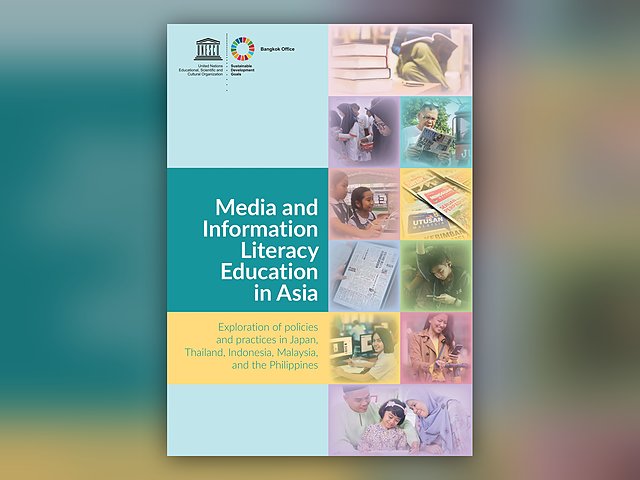
Publication
Éducation à la littératie médiatique et informationnelle en Asie : Exploration des politiques et pratiques au Japon, en Thaïlande, en Indonésie, en Malaisie et aux Philippines
Une exploration des politiques et pratiques de l'éducation à la littératie médiatique et informationnelle à travers l'Asie, suivant un fil conducteur : comment cinq pays abordent les risques urgents liés à la LMI dans des contextes formels, informels et non formels—Japon, Thaïlande, Indonésie, Malaisie et Philippines.
Publication
Étude de faisabilité pour connecter toutes les institutions d'enseignement supérieur africaines à Internet haut débit
Une étude de cas sur le Burkina Faso pour connecter toutes les institutions d'enseignement supérieur africaines à Internet haut débit, en retraçant la demande du secteur de l'éducation et l'offre du secteur des TIC, puis en se concentrant sur le réseau de recherche et d'éducation FasoREN et sa maturité NREN.
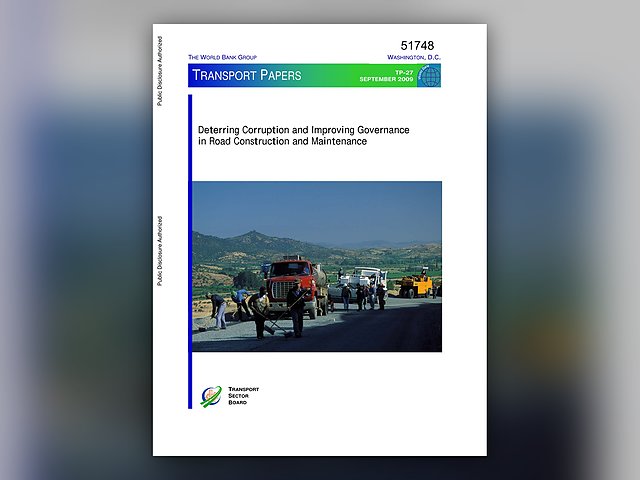
Publication
Dissuader la corruption et améliorer la gouvernance dans la construction et l'entretien des routes
Un guide pratique pour dissuader la corruption et améliorer la gouvernance dans la construction et l'entretien des routes — avec des analyses au niveau sectoriel et fonctionnel ainsi que des outils pour la planification politique, les prestations de construction, les unités techniques et de construction de l'État, les contrats de PPP et le suivi des progrès à l'aide d'indicateurs appropriés.
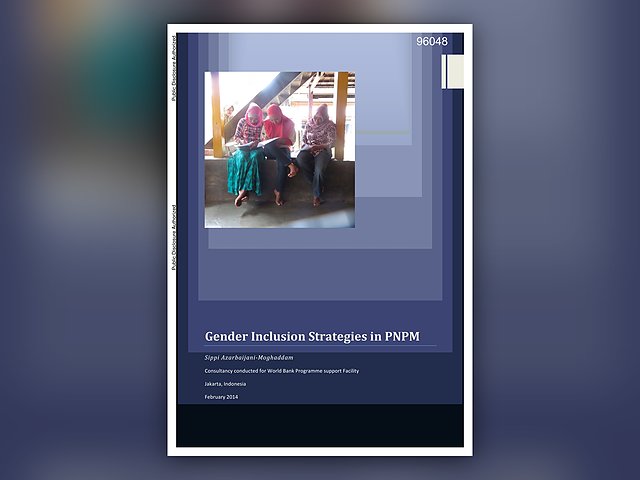
Publication
Stratégies d'inclusion de genre dans le PNPM
Une étude de conseil sur les stratégies de genre et d'inclusion dans le PNPM (Programme national de promotion des communautés rurales) pour la Facility de soutien aux programmes de la Banque mondiale — avec un accent sur les principes de genre, les mesures affirmatives, la participation des femmes et le suivi/l'évaluation d'impact.
Publication
Problèmes et options de développement des énergies renouvelables en Afghanistan
Une analyse des opportunités et des risques de soutenir l'approvisionnement en électricité de l'Afghanistan avec des énergies renouvelables — de l'infrastructure réseau incomplète et du manque de demande aux ressources en eau saisonnières jusqu'à l'objectif de fournir environ 10 % des besoins prévus (350–500 MW) à partir des ER d'ici 2032.
Publication
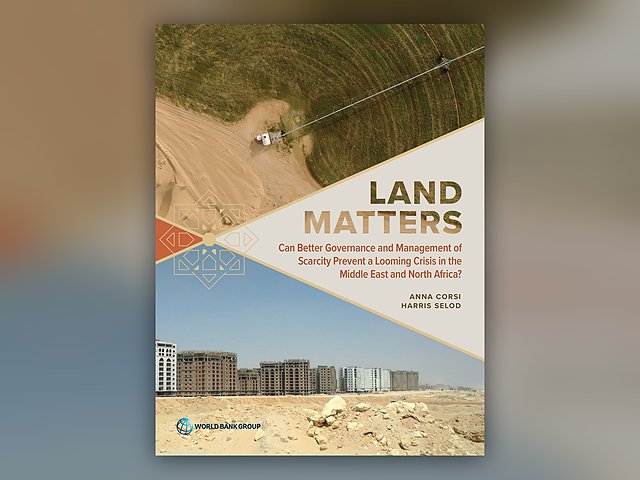
Les questions foncières
Une étude sur la rareté des terres et l'utilisation des terres au Moyen-Orient et en Afrique du Nord – en mettant l'accent sur les principaux moteurs, les obstacles juridiques et institutionnels, les barrières d'accès, les distorsions du marché et les options politiques concrètes pour une meilleure gestion des ressources rares.
Publication
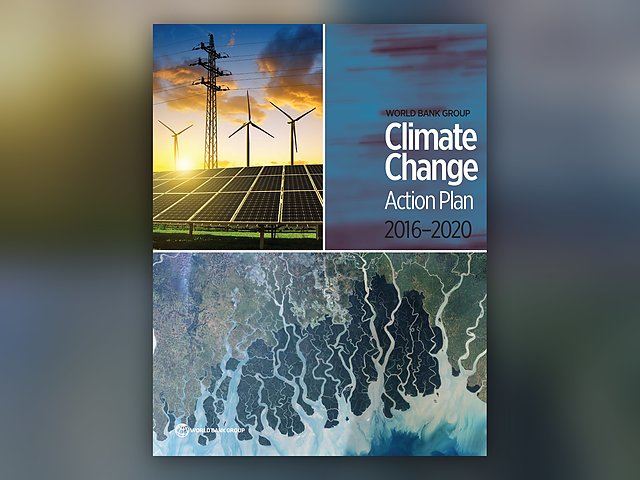
Plan d'action sur le changement climatique du Groupe de la Banque mondiale 2016-2020
Un plan d'action sur le changement climatique du Groupe de la Banque mondiale pour 2016–2020 avec un fil rouge : des politiques climatiques décisives aux leviers de ressources en passant par la mise à l'échelle d'actions climatiques concrètes — des énergies renouvelables aux villes durables en passant par « Ne laisser personne de côté ».